
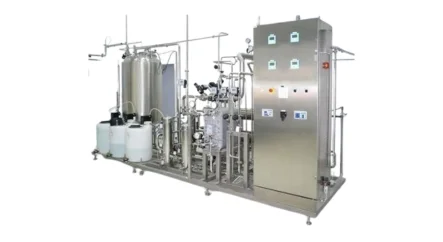
Description
To achieve quality standards for both Purified Water and WFI, pharma manufacturers leverage a range of water-treatment technologies, including softeners, UV light, carbon filtration, particle filtration, ultrafiltration, reverse osmosis and ion exchange, among others.
-
Drug Manufacturing:
Pharmaceuticals require ultrapure water for various stages of production, including formulation, cleaning, and rinsing of equipment.
-
Regulatory Compliance:
Pharmaceutical water must meet specific standards set by regulatory bodies like the FDA, ensuring the safety and efficacy of the final product.
-
Equipment Protection:
High-quality water prevents corrosion and scaling in equipment, ensuring its longevity and reliability.
-
Reverse Osmosis (RO):
RO systems use pressure to force water through a membrane, removing dissolved solids, salts, and other impurities.
-
Ultrafiltration (UF):
UF membranes filter out particles, bacteria, and viruses, providing a high level of purity.
-
Deionization (DI):
DI systems, like electrodeionization (EDI), remove ions from water, resulting in ultrapure water suitable for various applications.
-
Ion Exchange:
Ion exchange resins remove specific ions from water, providing a cost-effective method for water purification.
-
Softeners:
Water softeners remove hardness-causing minerals like calcium and magnesium, preventing scaling and ensuring the integrity of pharmaceutical formulations.
-
UV Disinfection:
UV light is used to kill bacteria and other microorganisms in water, ensuring its safety and purity.
-
Carbon Filtration:
Activated carbon filters remove organic matter, chlorine, and other contaminants from water.
-
Nanofiltration:
Nanofiltration is a membrane-based technology that removes a wide range of contaminants, including dissolved salts and organic molecules.
-
Forward Osmosis (FO):
FO is a membrane-based technology that uses a pressure difference to separate water from a solute, resulting in a high water recovery rate and lower environmental impact
-
Advanced Oxidation Processes (AOPs):AOPs, such as ozone and UV/hydrogen peroxide, are used to remove persistent organic pollutants and other contaminants from wastewater